Anatomy of a champion: Which 2026 teams fit the statistical profile?
What does a champion look like?
Anyone familiar with the pantheon of NBA champs knows certain teams have dominated: Only 15 franchises have won the last 46 titles. But what do they have in common? Is there a statistical profile we can use to learn about this year's playoff field?
We're looking for similarities among championship teams since 2004-05, which is when the NBA expanded to its current 30-team format. That era coincides with the league's elimination of hand-checking, is recent enough to account for the 3-point and analytics revolutions, and follows the shift to all playoff series becoming best-of-seven (starting in 2003).
Let's dig into the numbers.
Win profile
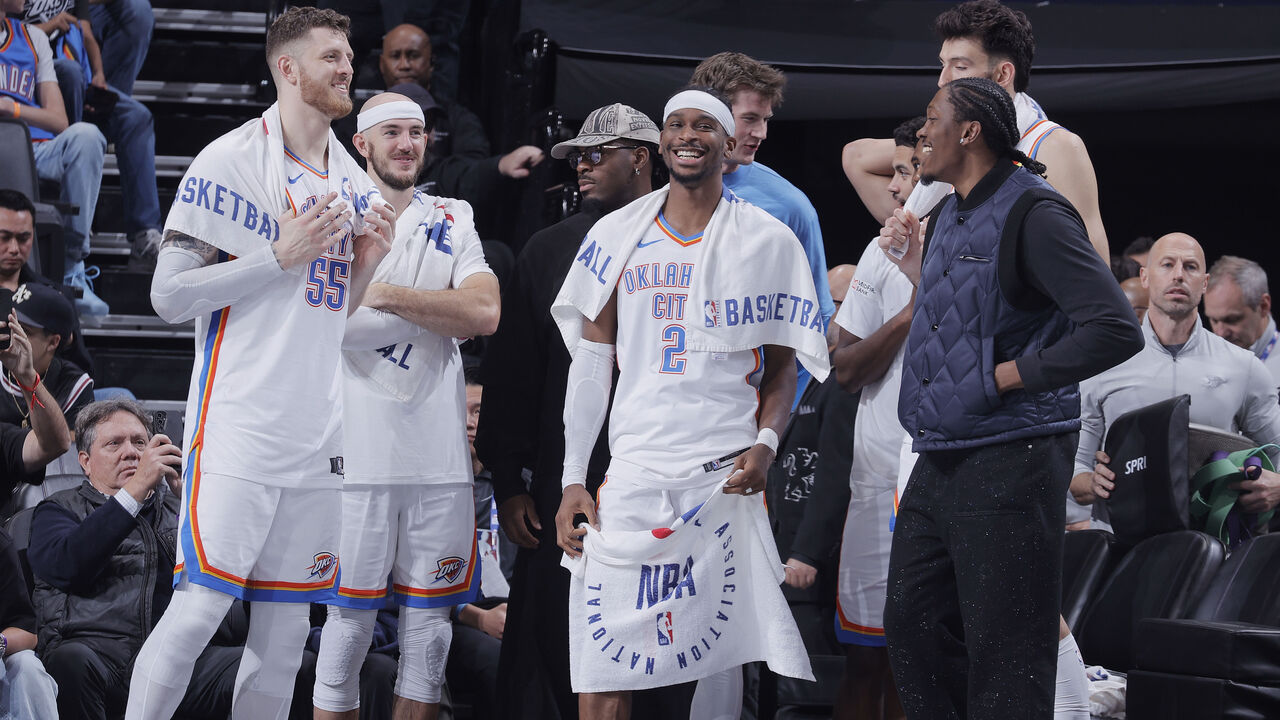
Modern champions have a minimum regular-season win percentage of .634 - the equivalent of 52 wins in 82 games - and ranked in the top seven overall.
That cutoff might be too loose, since the team with the lowest winning percentage in this cohort, the 2005-06 Heat, produced at a 55-win pace (41-20) after Pat Riley took over coaching duties from Stan Van Gundy. Plus, Miami was on a 58-win pace (42-17) with Shaquille O'Neal in the lineup after the big man missed 18 of 20 games to start the campaign. The 2021 Bucks, meanwhile, used the regular season as a testing ground to prepare for the playoffs and were always better than their seventh-place finish.
In addition to the 52 wins and top-seven record, an NBA champion needs a top-eight point differential; 20 of the last 21 champions have posted a top-six scoring margin.
Every modern champion except the 2006 Heat recorded a winning record against winning teams, and the lone champion in our exercise to post a losing record on the road - the 2023 Nuggets - still nabbed 19 wins away from home. Meanwhile, each of the last 21 title teams dominated at home, winning at least 70% of their home games during the regular season.
Taking all this data into account, which teams compiled championship-level win profiles in 2025-26?
Teams that measure up: Thunder*, Spurs*, Pistons*, Celtics*, Knicks
(*Asterisk denotes teams that met the ultra-exclusive cut-offs.)
Potential outliers: Nuggets, Cavaliers
The only thing keeping Denver from meeting the basic requirements for a championship-winning profile is one home loss too many. That hardly feels like enough to disqualify Nikola Jokic's squad, which still features more than half of its 2023 championship rotation.
As for the Cavs, while their 11th-ranked point differential still wouldn't have measured up, the version of Cleveland we saw after James Harden's debut posted a top-five record, went 8-7 against winning teams, 10-3 at home, and 11-6 on the road.
Offense
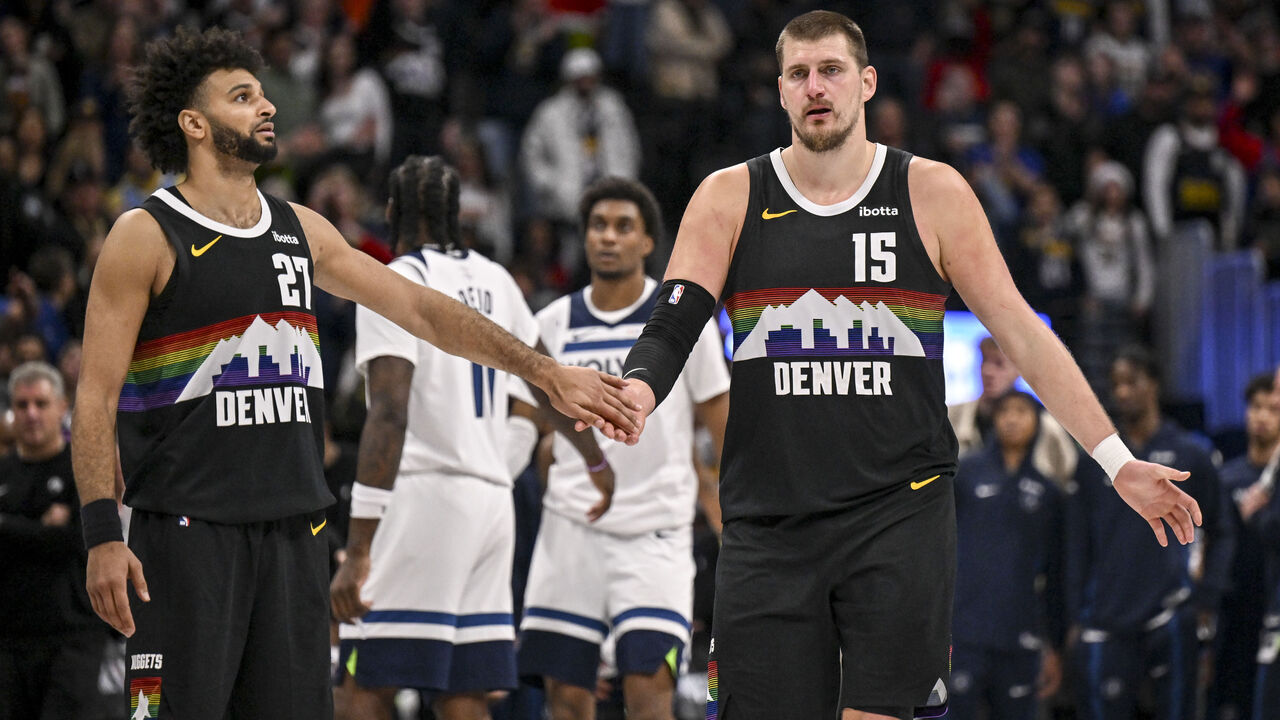
The championship outliers on the offensive end make this data the noisiest of any category.
Eighteen of the last 21 champions finished with a top-nine offensive rating, a top-seven effective field-goal percentage, and a top-eight half-court offense. Dig deeper, and you'll discover that as NBA offenses have emphasized the deep ball, 13 of the last 14 champions finished in the top nine in 3-point shooting (with 3-point accuracy more indicative than 3-point attempt rate).
However, when all 21 title-winners from this time frame are considered, a team qualifies as an offensively capable contender by posting a top-16 mark in offensive rating and half-court efficiency, a top-15 effective field-goal percentage, and a top-23 3-point percentage.
Those very modest cutoffs don't really discriminate. Blame the Lakers' last two championship teams (2010 and 2020) and the 2022 Warriors, whose mediocre regular-season numbers never told the whole story (like Klay Thompson playing only 32 regular-season games).
Teams that measure up: Nuggets*, Thunder*, Celtics, Spurs, Knicks, Hornets, Cavaliers, Pistons, Lakers, Clippers, Timberwolves, Hawks
Potential outlier: Pistons
The East's top seed made the cut line, but questions remain about Detroit's offense. The Pistons rode Cade Cunningham's combination of scoring and playmaking, good team rim frequency, and offensive rebounding to impressive regular-season production. However, Detroit's 17th-ranked 3-point percentage, 16th-ranked half-court efficiency, and its turnover issues are all red flags. The only top-six seed in either conference that turned the ball over more frequently than the Cunningham-led Pistons was Houston, which played the entire season without a true point guard.
Defense
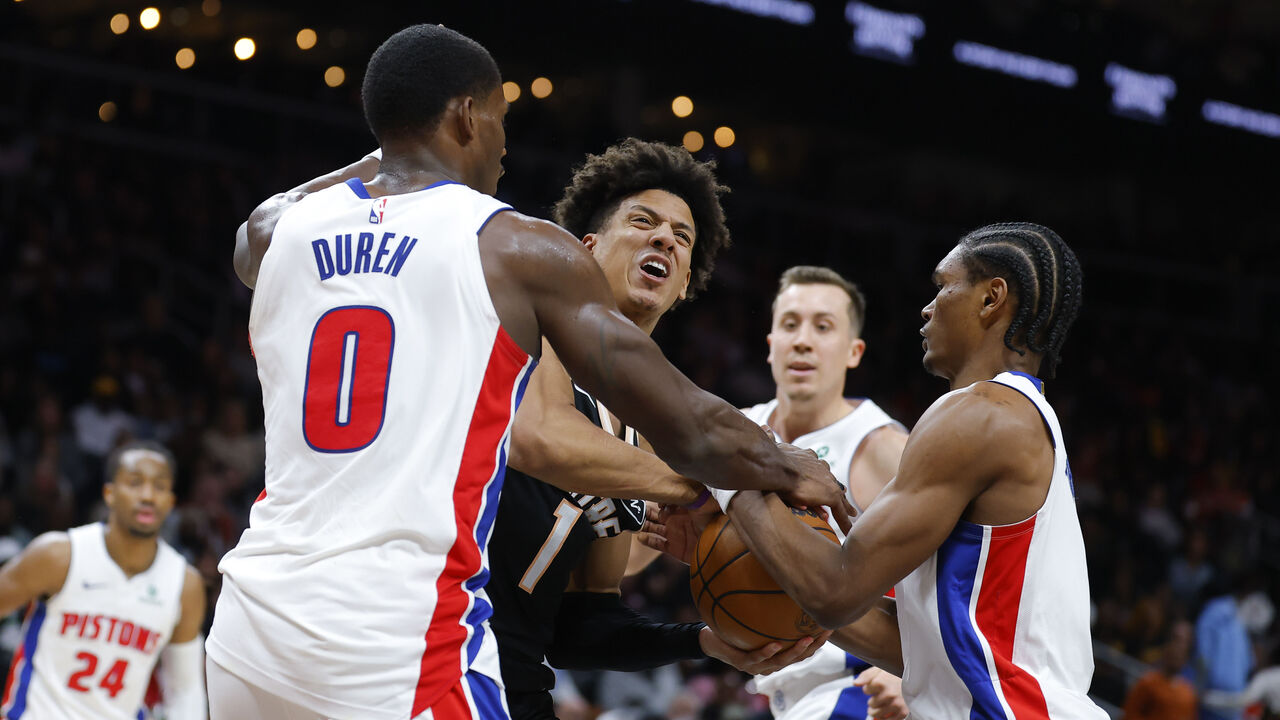
Although the modern era has been defined by the proliferation of 3-pointers, the analytics revolution, and the resulting scoring boom, defensive performance remains a better predictor of postseason success.
Every champion in our sample, other than the 2023 Nuggets, finished in the top 11 defensively, and 17 of the last 21 champions placed in the top 10 in limiting opponents' effective field-goal percentage (though only top-15 marks in both categories are required).
Even the 2023 Nuggets' pedestrian (15th-ranked) defense - which ratcheted up in the playoffs - still finished the 2022-23 campaign slightly stingier than league average. In fact, only two teams in NBA history won a title with a below-average defense: the 2001 Lakers (1.8 points per 100 possessions worse than league average) and the 1956 Philadelphia Warriors (0.5 points per 100 possessions worse). In stark contrast, 17 of 79 champions have triumphed despite a below-average offense, most recently the 2004 Pistons.
Teams that measure up: Thunder*, Pistons*, Spurs*, Celtics*, Raptors*, Rockets*, Knicks*, Timberwolves*, Suns, Hornets, Trail Blazers, Cavs
Potential outlier: Hawks
In a 49-game sample after Trae Young played his last contest for Atlanta, the Hawks boasted a top-five defense. New franchise star Jalen Johnson has his own defensive shortcomings, but they're far more manageable at his size, especially with problem-solvers like Dyson Daniels, Onyeka Okongwu, and Nickeil Alexander-Walker around him.
Star talent
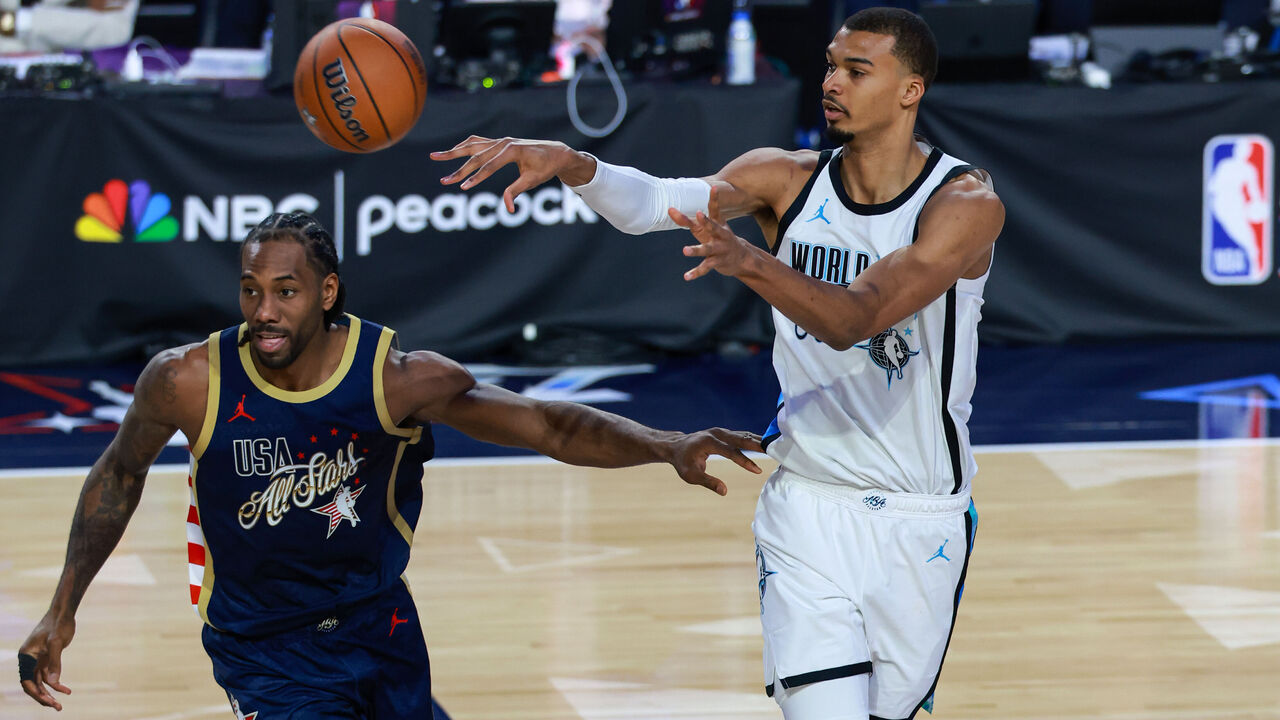
The postseason - and especially the Finals - is about transcendent talent. Depth can carry you to the playoffs, and an All-Star can drag you to the second or third round, but you need a generational superstar if you want to compete in June. There's a reason 40 of the last 46 Finals have featured at least one of LeBron James, Steph Curry, Tim Duncan, Kobe Bryant, Shaq, Michael Jordan, Magic Johnson, or Larry Bird. Add names like Hakeem Olajuwon, Isiah Thomas, Giannis Antetokounmpo, Nikola Jokic, Shai Gilgeous-Alexander, and Luka Doncic to the list, and you've covered all 46.
There's no way to quantify with 100% accuracy where players rank individually. But one tool, made famous by Bleacher Report's Andy Bailey, determines how stars stack up based on their average rank across numerous catch-all stats. According to that data, each of the last 21 champions employed a player who ranked in the top 15 during the regular season.
When you consider how flawless the 2014 Spurs were and how much better Leonard was than his 15th-place ranking in 2019 (when load management impacted his regular-season rating), you realize that a top-10 player is probably necessary.
You'll also notice every champion featured at least one All-Star, with 16 of the last 21 employing more than one.
All 21 champions also featured at least one All-NBA selection (11 had multiple players on the year-end list), and 18 of the last 21 champs boasted at least one All-Defensive team selection. But those awards won't be handed out for weeks, so we can't use them to filter here.
Teams that measure up: Nuggets (Jokic, Murray), Thunder (SGA, Holmgren), Spurs (Wembanyama), Lakers (Doncic), Clippers (Leonard), Cavs (Mitchell, Harden), Pistons (Cunningham, Duren), 76ers (Maxey), Rockets (Durant), Knicks (Towns), Timberwolves (Edwards)
Potential outliers: Lakers, Celtics
You could argue that the Celtics should replace the Lakers on this list. After finishing as the fourth-ranked player during the regular season, Doncic's postseason status has been left in serious doubt due to a hamstring injury. Meanwhile in Boston, five-time All-NBAer Jayson Tatum averaged roughly 22 points, 10 rebounds, and five assists (albeit on underwhelming efficiency) in his first 16 games back in the Celtics' lineup. And though Jaylen Brown didn't crack the top 15, no one doubts the former Finals MVP was that caliber of star this season.
That said, perhaps a 41-year-old LeBron James is still top-15 caliber when he needs to be. In James' final four games of the season - sans Doncic and the injured Austin Reaves - the living legend averaged 25.5 points, 11 assists, 6.8 rebounds, and 2.5 steals on 62% true shooting.
Who's left standing?
In the first six years of this exercise, each season produced between one and three teams that checked every box of a contender. Perhaps it's a sign of the more balanced times that this year produced four such teams: the defending champion Thunder, along with the Spurs, Pistons, and Knicks.
Unsurprisingly, Oklahoma City is the only team that met even the most exclusive cutoffs in each category. The Thunder employ the game's best player in Gilgeous-Alexander, whose combination of shot-making and foul-drawing makes him the most efficient high-usage player in the league (1.34 points per shot attempt). They also boast a terrifying league-best defense and the fifth-best point differential of all time. Assuming relative health, the Thunder should become the first repeat champions since the 2018 Warriors, snapping the NBA-record streak of seven different champions in the last seven years.
If there's one team most capable of taking the belt from the champs, the numbers suggest it's San Antonio. The Spurs stunningly dominated the Thunder this season, accounting for 22.2% of OKC's losses (4 of 22). However, it would be virtually unprecedented if the young Spurs got the job done. No one's doubting Victor Wembanyama's otherworldly abilities, but San Antonio's eight-man rotation enters the playoffs younger than any champion since the 1977 Trail Blazers and even less experienced (71 playoff games) than sophomore Larry Bird's 1981 Celtics (90 games). Even last year's Thunder, the second-youngest champions of all time, had taken some postseason lumps together by reaching the second round the season prior.
Out East, the Pistons deserve a ton of credit for one of the most inspiring two-year turnarounds in league history. But Cunningham only returned from a collapsed lung a week ago, and I still think Detroit needed to be more aggressive at the trade deadline, when the team's answer to its 3-point woes was simply Kevin Huerter.
Finally, tortured Knicks fans can only hope New York's championship-level metrics don't ring hollow. The Knicks won 53 games, finished the season with top-seven marks on both ends of the court, and are entering the postseason relatively healthy. Still, the journey never felt as smooth as those facts suggest. A first-round matchup against the surging Hawks, the starting lineup's uninspiring play, and the defensive limitations of a team featuring Jalen Brunson and Karl-Anthony Towns are just some of the concerns keeping New Yorkers up at night.
Potential outliers: Celtics, Nuggets, Cavs
We know Boston has the star talent necessary to complete its championship picture. Meanwhile, Denver's debilitating defense could be cured by a healthy Aaron Gordon, whose presence gives the Nuggets a top-five-caliber D rating (112.0). Finally, Cleveland (the league's only second-apron team) looked a lot more like the contender we envisioned in the second half of the season.
Just happy to be here: Magic, Warriors
Of the entire 20-team postseason field, the only clubs that didn't meet a single championship prerequisite were Orlando and Golden State, two hopeful contenders snakebitten by injuries this season. The Warriors can at least check the star-talent box when Curry is healthy, but the Magic's presence here just cements their status as the league's most disappointing squad. Trading for Desmond Bane (who's been great for them) was supposed to vault Orlando into the upper echelon. Instead, this season will likely end in head coach Jamahl Mosley's termination.
For what it's worth, I found clutch-time performance (on either end), free-throw attempt rates, and rebound rates weren't great indicators of a team's postseason fortunes.
Joseph Casciaro is theScore's lead NBA reporter.
HEADLINES
- Barnes brushes off underdog label vs. Cavs: 'That shit don't matter'
- Report: NBA reviewing Ball's trip on Adebayo
- NBA regular-season viewership up 86% over last year
- NBA contenders: 1 reason why each favorite will - and won't - win the title
- With Brown leading and Tatum back, Celtics are serious title contenders